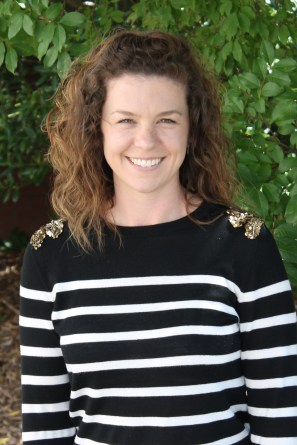
Drew Edwards Temple – Alleghany County Clerk

IMG_5178For Drew Edwards Temple, new administrative assistant to the Alleghany County manager and clerk to the county commission, her journey to that role followed a common path.  Starting here in Alleghany, she explored several options in our region before returning home.  Each step added a piece of life experience.

Drew grew up in the Twin Oaks community just outside Sparta.  Her parents, Bill and Debbie Edwards, are graduates of Appalachian State University.  Bill was an estimator with NAPCO and Debbie was a teacher.  The Edwards family tree has roots spread across Alleghany and adjoining counties. Her mother’s family came to the county in 1963. After a stint in the military and college at Elon, Drew’s grandfather, Jack Martin, took a job with Sparta Pipes where he later became president of the company.

After graduating Alleghany High School in 2005, Drew attended Surry Community College for one year before transferring to Appalachian State University (ASU). After a few semesters at ASU, she decided to set aside school for a while (she later returned and earned her associate’s degree from Wilkes Community College) and took a job with Ryder Truck Rentals in Hickory.

Ryder has one of North America’s largest fleet of trucks with over 234,000 vehicles in operation.  Drew worked as a customer service coordinator and helped ensure that customers were renting quality vehicles that were properly maintained and serviced.

Drew left Ryder and moved to Charlotte where she took a job with the Pennsylvania Steel Company.  There she worked in sales with a primary focus on recurring customers.  In 2013, she moved back to Alleghany County and continued to commute to the Charlotte area for her job.
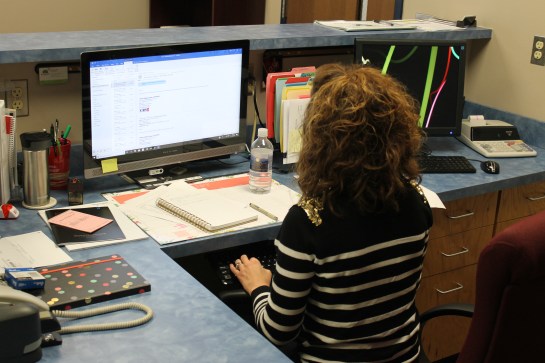
IMG_5176

As Drew wound her way through college and jobs at Ryder and Pennsylvania Steel, her future husband, Mac Temple, was laying the foundation for his career.  Mac had attended Catawba Valley Community College and worked in automotive repair in the Hickory area.  Sensing a need for Asian and European import repairs in Alleghany County, Mac and Chris Lucas opened Modern Province Imports in Sparta.

Drew and Mac were married in 2014.

Drew’s transition back to Alleghany County has been challenging.  She took a job with Pioneer Eclipse in 2014 in inside sales where she marketed to governmental and school systems.  These contracts are often accompanied by a mountain of paperwork because of the guidelines of the numerous governmental entities.  She later shifted to field marketing to hardware stores that offer rental units to customers.  That job played out in September 2017.

Following Pioneer Eclipse, Drew worked for several months as a teller at Skyline Bank in Sparta before she took on her new role in the county manager’s office.

When asked about coming home, Drew offered several insights that may hold the key for creating an environment that is attractive to young couples.

Drew and Mac now have a 16 month-old son, Graham. As a family with two working parents, they are acutely aware of the value of having high quality day care in our community.  With the recent closure of the afterschool care program in our county schools, Drew is already thinking about how they will handle that issue of when Graham reaches school age.  Drew acknowledges that they are privileged to have parents who can help out with childcare needs.  She also realizes that many families don’t have that luxury.

Drew is quick to offer how fortunate she has been to obtain good jobs after moving back to Sparta.  She recognizes that that isn’t the case for everyone. She points out that having steady employment in good jobs is the key to attracting people like her to the county.  This includes supporting entrepreneurs like Mac as they seek to build businesses in the county.

Having grown up in Alleghany County, Drew and Mac knew what to expect when they returned.  They had experienced the big city and were looking forward to a slower pace of life in which to raise their son.  It is Drew’s opinion that we won’t attract young couple with more things.  Instead, the Alleghany lifestyle is appealing.  She mentioned spending time on the river and camping as attributes that appeal to her and Mac.

Perhaps most important in their decision to move back was the lure of being near family.  A theme of the importance of family is continually woven into conversation with Drew.

IMG_1348

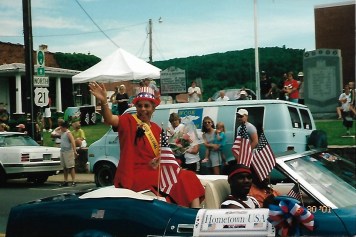
Drew, Mac and Graham Temple enjoying the 4th of July parade

We often think of the arc of a person’s life as one of smooth lines and linear transitions.  But closer examination usually reveals a series of twists and turns coupled with peaks and valleys.  When taken in totality, these give us access to perspective, wisdom and insight.  These vantage points are what Drew Temple will bring to local government.  More importantly, it is what she brings to our community.
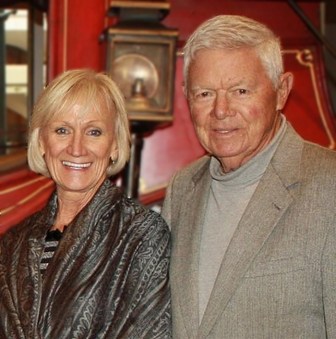


Bob Black – A Life of Service

bob and carol 2

Bob and Carol Black

“I have been fortunate.”

Those words surface often as Bob Black recounts his life. Some would equate “fortunate” with “lucky” or “being in the right place at the right time.”  But, as the events of Bob’s life are examined, “fortunate” is a complex mixture of the right kinds of relationships, recognizing opportunities when they present themselves, and a strong personal work ethic.  Perhaps more important, it is the ability to take a long-term view of what can be accomplished when those three things intersect.

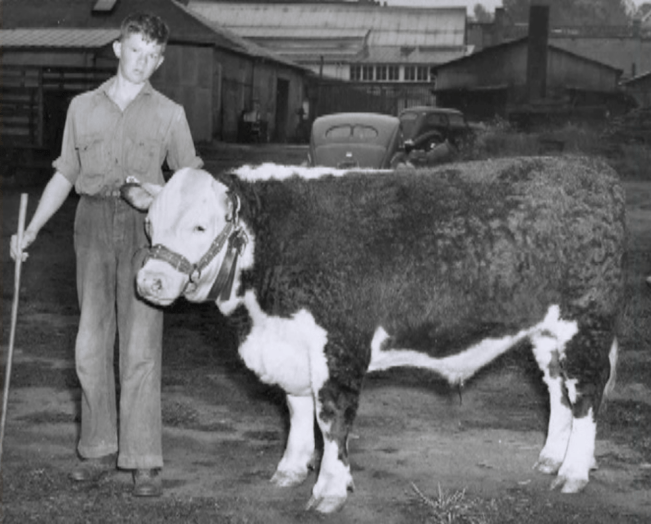
Bob Black 8Born in 1930, Bob spent his early years in the Piney Creek community of Alleghany County.  His parents, Emerson and Alma, were both teachers at Piney Creek School.  In 1933 or 34, Bob’s father became the county agricultural agent.
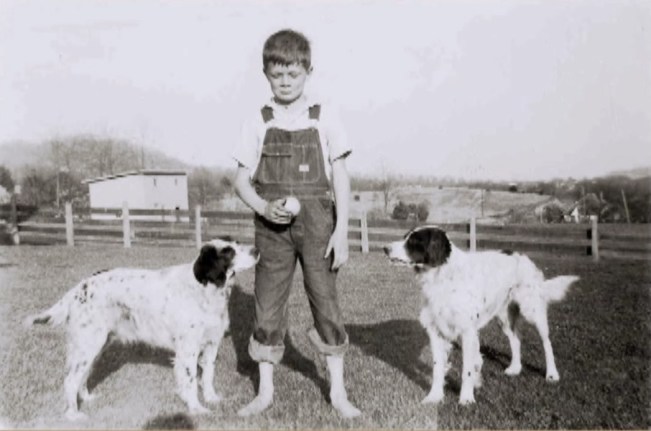
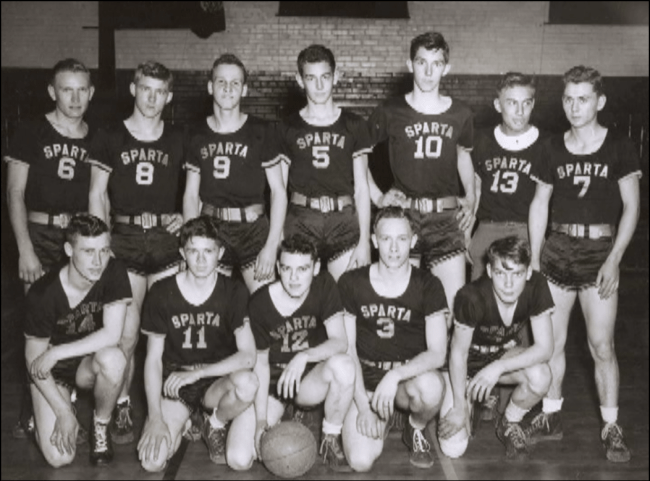
Bob recalls that in addition to serving as a liaison between local farmers and North Carolina State University, his father also filled the role of veterinarian, giving vaccines and tending to sick livestock.  In those days, in addition to cattle, Alleghany farmers raised and sold thousands of sheep. Emerson would coordinate the sale and shipment of lambs to markets up north, taking truckloads of lambs to railroad docks in Galax or Wilkesboro.  In 1938, his father was instrumental in securing a loan from the Rural Electrification Authority to setup an electric cooperative which brought electricity to Alleghany County.

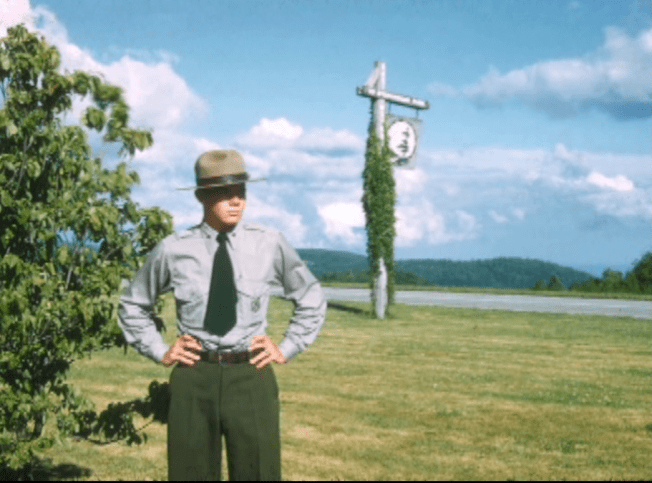
During his early childhood, Bob’s family moved to Sparta.  Their first home was on Main Street between the homes of Dr. Thompson and Dr. Burgiss near the current location of BB&T Bank.  The family later built the rock house that still stands across from the current Alleghany County Fairgrounds.  To supplement their income, the Blacks took boarders into their new home.  Bob describes those boarders as primarily school teachers and recalls that the first park ranger on the Blue Ridge Parkway was also a boarder.

Bob Black 4

Bob’s childhood was filled with rich mixture of contradictions.  He inherited a love of hunting and fishing from his father.  Bob recalls that when he was 12 years old, he killed 67 squirrels that fall with a single shot .22 rifle.  He then describes that same 12 year-old as checking out an “arm load” of books each week from the library.  He followed his dad on farm visits, even learning to give vaccinations.  He could mingle comfortably with farmers and doctors and teachers.  Bob lettered in football, basketball and baseball in high school while balancing farm chores.

Bob Black 5

He followed his father’s example and went to college at North Carolina State where he was a member of the Reserve Officers Training Corps (ROTC).  After living in the dorm his freshman year, he spent his sophomore year living in the basement of the college gym.  His final two years were spent on the college farm where he rose at 4:00 am to work on the farm before heading out to classes.  During his time at Sparta High School, Bob was active in the Future Farmers of America (FFA) and participated in livestock judging.  He continued this at college and traveled the country judging livestock.

Bob Black 6

Bob’s summer jobs gave him with valuable life experience.  A college friend told him of going to Kansas one summer to work in the wheat harvest.  The friend gave Bob the name and number of the farmer. That summer Bob hitchhiked to Kansas, called the farmer and asked for a job.  At the end of the summer, Bob planned to visit family in Nebraska.  The farmer drove Bob out to the highway.  It took two hours for the first vehicle to come by.  Bob hitchhiked on to Nebraska and then back home.

The next year, Bob worked as a seasonal ranger on the Blue Ridge Parkway.  One night after his shift, he came into Sparta and spent the evening getting to know two men, Jim Lowe and Carl Buchan.  The two brother-in-laws owned Lowes Hardware and had opened a store in Sparta.

Bob Black 7

After college, Bob entered the U.S. Army in 1953, fulfilling his two year military commitment made with the ROTC.  He was commissioned as a lieutenant and soon found himself the youngest company commander at Ft. Knox.  He arrived in Korea after the truce and took part in the prisoner of war exchanges.

After fulfilling his military commitment, Bob returned home and applied for a job as county agent in Cleveland County.  As he worked through that process, Carl Buchan sent word that he would like to meet with Bob.  Bob interviewed with Mr. Buchan and went to work for Lowes the next day.

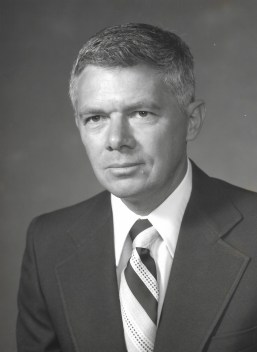
Bob Black 1Bob started on the sales floor with Lowes.  He was successful in sales and was later moved to purchasing.  The work led him across the country to meet with manufacturers and supplies. He went on to become the vice president of purchasing.

Lowes was nationally known for its profit sharing plan.  Mr. Buchan felt that when employees owned shares of the company, they would be more engaged and productive.  As a result, many employees were financially able to retire after 20 years of service.  Bob followed this pattern, retiring in 1975 at the age of 45.  He viewed this as an opportunity to spend more time with his family and to spend more time outdoors.  It also begin a remarkable period of civic engagement.

Bob has been active in supporting NC State University.  He served on the Wolf Pack Club board for 16 years and was president of the alumni association.  He became close friends with coaches Norm Sloan and Jim Valvano.  Bob established two need-based endowments that supports six scholarships. He also supports four varsity sports scholarships, including the first for cheerleading.  In 2005, Bob was awarded the Watauga Medal for his “dedication and devotion to the advancement of North Carolina State University.”

In Alleghany County, there are few civic organizations or non-profits that haven’t experienced Bob’s touch.  He was a founding board member of the Chamber of Commerce and was instrumental in the recruitment of industry in Alleghany County.  Many of his private ventures such as joining investors in building the Alleghany Inn or purchasing the Alleghany News years ago, were driven more by a sense of civic duty that a desire for profit.  Bob views one of his greatest accomplishments as negotiating the donation of the current fairgrounds property from the Higgins family to the county. He is active in Mount Zion United Methodist Church in Piney Creek , a church his family helped found almost 200 years ago.

These days, Bob enjoys traveling with his wife, Carol – they have been married for 14 years.  They enjoy time with their families.  Bob reads four different newspapers and has maintained a subscription to Forbes magazine for over 50 years.

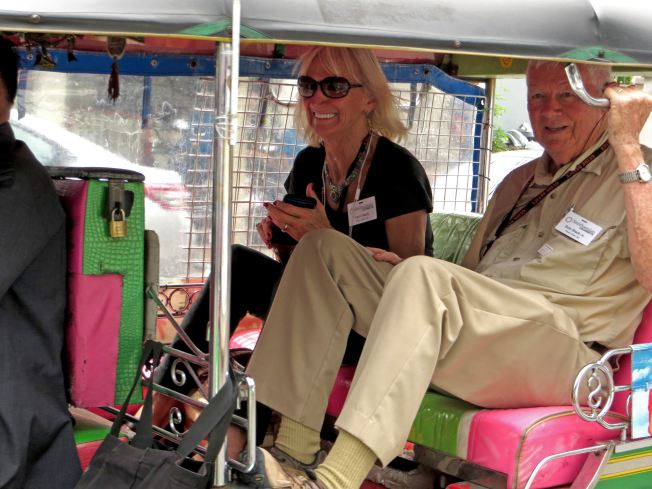
BC-Tuk-Tuk

Bob and Carol enjoying a tuk-tuk ride in Bangkok

While Bob describes himself as fortunate, many others who can tie their good fortune to Bob Black and his family.  Countless students at both the college and high school level have been fortunate recipients of Bob’s generosity. Anyone who enjoys an event at the Alleghany County Fairgrounds can trace their good fortune to a conversation Bob had with Buck Higgins.  Local businesses who are assisted by the Chamber of Commerce are fortunate for the visionary leadership of Bob and others who had the foresight to form that local organization.

We are all fortunate that Bob Black is a part of our community.

AbsolutelyAlleghanyLogo

img019 (1)


Trout Fishing in Alleghany County

John trout 3

photo by John Caveny

April brings warmer weather to the mountains.  More important to anglers, April brings hatchery raised trout to the numerous streams in Alleghany County.  Below is a list of upcoming trout stocking dates for the month.  The names of the stream include hyperlinks that provide maps to these waters.

Be mindful that most of the streams are on privately owned land.  Be a courteous angler.  Use gates and be sure to close them behind you.  Pick up any litter you find and leave the area cleaner than you found it.

The dates are subject to change depending on conditions at the hatchery.  Checkout NC Wildlife for updates or changes.  Click here for fishing licence information.

Location                        April Stocking

Big Glade Creek                      10

Big Pine Creek                         23

Bledsoe Creek                          17

Brush Creek                             10, 23

Little River                                5, 17

Little River                                5         (Delayed Harvest portion)

Meadow Fork                          18

Pine Swamp Creek

Piney Fork Creek                    18

Prather Creek                          18

AbsolutelyAlleghanyLogo


Charity Gambill-Gwyn – A Life of Service

IMG_5159As Sparta Town Manager Bryan Edwards recounts the story, he begins with “Charity taught me to ride a bicycle.” He goes on to describe with a laugh of being led to the top of a hill where Charity gave the directions of “pick up your feet and keep the handle bars straight.”  She then gave him a push and sent a young Bryan barreling down the hill.

“Pick up your feet and keep the handle bars straight” could be the motto of how Charity Gambill-Gwyn has lived her life.

Mrs. Gambill-Gwyn was born in the Vox community of Alleghany County in 1941.  She recalls faint memories of her great-grandfather, “Big Charlie” Edwards.  Family history recalls that Mr. Edwards was purchased at a slave auction for $13.  Mrs. Gambill-Gwyn describes this in a matter of fact tone that offers no bitterness or excuses.

charity uncle charlie

Charlie Edwards

charity sister

Charity Gambill-Gwyn (left)

She describes segregated schools in a similar manner.  “We used to wait out by the road and would catch a ride with the mailman to our school at Cherry Lane.  We then rode the bus home in the afternoon.”  Cherry Lane School had grades 1st-8th.  High school for African American students in Alleghany County required a 60 mile roundtrip bus ride down the mountain to Wilkesboro to Lincoln Heights School.  That long daily trip and family financial needs led a teenaged Charity to leave school.  Even though she was out of school, she stayed connected to the educational system by driving a bus and working in the school cafeteria for many years.

Mrs. Gambill-Gwyn married and had four children.  When circumstances changed and she found herself a single mother, she dug in.  “I grew up working.  I hoed corn, milked cows and worked in the fields.”  As a single mother she often worked a public job and when she finished her day there, would work in people’s homes.  “I did a little of everything – ironing, cleaning, housework.  It was hard with four children.  I couldn’t have done it without my mother, Mattie Simpson Carter’s, help.”

charity mother

Mattie Simpson Carter

She worked at the Troutman plant until 1974 when he took a job at Dr. Grabow – Sparta Pipes.  In 1981 she was named the environmental health and safety manager coordinator at Grabow.  When she assumed that role, there was no organized safety program at the plant.  She developed programs for inspections and began safety training.  She also oversaw the installation of safety devices on the machinery.  When she began working there the company had over 350 employees.  As a result of their emphasis on safety and training, spearheaded by Mrs. Gambill-Gwyn, the company went ten years without a lost time accident.  She retired there in 2006.

And if her days weren’t full enough, Mrs. Gambill-Gwyn still found time to be involved in the community.  She laughs when she says that she “sold a lot of candy” for the PTA.  She was a charter member of the Alleghany County Rescue Squad which formed in 1969, and was one of three female members and the only African American on the squad.  She retired from the squad in 1999 after serving as the secretary/treasurer for 27 years.  In 1976, she was asked to join the Blue Ridge Electric (Energy) Board of Directors.  She describes Blue Ridge as one of the leading energy co-ops in the country.  “They believe in training, even for their board.  I gained more knowledge serving on that board than I would have gained in college.” She served with Blue Ridge until 2015.  Other service boards include:

In discussing that list, Mrs. Gambill-Gywn says that, “ ‘No’ is not in my vocabulary.”

This combination of work ethic and community orientation caught the eye of former Alleghany School superintendent John Woodruff.  He approached her and encouraged her to run for the school board.  She pointed out that she was a high school dropout.  Mr. Woodruff countered, “But you know the needs of our students.”  She won the party primary that spring and led the ticket that fall.  She went on to serve 16 years on the board.

After 16 years she decided to get out of politics, but the community saw value in her elected role – she was encouraged to run for county commission.  With her win that fall, she became the 1st female and 1st African American county commissioner in Alleghany County.  With the support of Commissioners Ken Richardson and Patrick Woodie, the board voted to begin observing Martin Luther King, Jr.’s birthday as a county holiday.

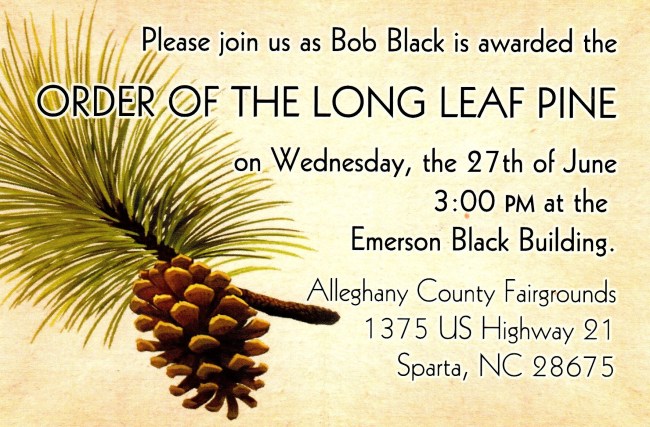
charityRecognition for her work has come in various forms – from her selection to the State School Board in 1992 to the Nancy Susan Reynolds Award in 1994 to the Order of the Long Leaf Pine (the State of North Carolina’s highest award) in 2002.  Alleghany County declared June 30, 2001 as Charity Gambill Day and she served as the grand marshal for the 4th of July parade.
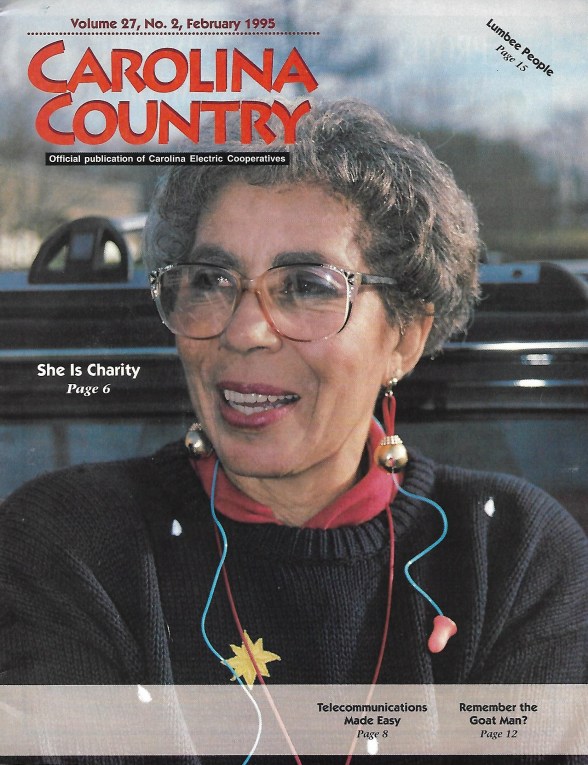
charity magazine

1995 Issue of Carolina Country

These days Mrs. Gambill-Gwyn remains active the community.  She teaches Sunday School and is the church clerk at White Oak Baptist Church, the oldest African American church in Alleghany County.  She loves the outdoors and tends two gardens during the summer.

Charity Gambill-Gywn is fond of saying, “One grows and blossoms where they are planted.”  Our community has reaped an abundant harvest of her being planted in Alleghany County.

AbsolutelyAlleghanyLogo

The Dreamers of Alleghany County, NC

by Dale Caveny

I was struck that in virtually every sense, she is an average young American. She wore a T-shirt festooned with the name of a well-known clothier that caters to young adults. Her jeans had rips on the legs – a style common among that age group. She described her years at Alleghany High School in a way many understand – a period of academic rebellion that led to a stern conversation with her father. He described the challenges he had faced and emphasized that he wanted her to have a stable life and career. That conversation resulted in her getting serious about her studies and filling her afternoons with sports.

She is now in college with an eye on a professional career in a city. She is articulate and well-spoken with big plans for her future. She is a Dreamer. She asked that her identity not be revealed because of the uncertainty on the horizon for her and other students.

IMG_5154

Her father came to the United States from Mexico when she was just a baby. She describes him as having always been an independent businessman. He has told her many times of starting an ice cream business in Mexico when he was only 7 years old. His business grew quickly and soon he employed his friends. Once in the U.S., he found work in the construction field in a large southern city.  He came here with his own set of dreams.

Once established, he sent for the family when she was only 3 years old. She crossed into Texas with her mother and brother, and the three were reunited with her father. They traveled across the South until they came to the city where he was working. Her memories of those days are a little fuzzy, but her father often tells her of them living in a cramped one room apartment.

She and her brother slept on couch cushions with her dad’s coat as a blanket. He continues the story with, “…and then we got an apartment with a bedroom and a bed. We lived there a while and then we moved to Alleghany County.”

A family member was already in Alleghany when her family arrived. They settled in quickly. They now had a house with multiple rooms and multiple beds. Her father began doing construction work. The quality of his work created more demand for his services, and he now has six others working for him.

When she was considering college, an older family member told her of the new program, initiated by the executive action of President Obama, Deferred Action for Childhood Arrivals, commonly known as DACA. This program would grant legal protection that would allow her to attend college.

While this program offers protection against deportation, it does not grant her true resident status in North Carolina. While she has lived in this state most of her life and resides here now, because of her immigration status, she is considered a non-resident for tuition purposes. This quadruples her college costs. She accepts this reality with a shrug.

The political discussion of the DACA program and immigration reform is a different story. While she is concerned about the approximately 800,000 young people offered protection under DACA, the protection granted is very personal to her. She would like to visit family in Mexico – she has never been back – but she is afraid that if she leaves she won’t be allowed to return to the United States.

She has family members who work and contribute to our local economy but live in the shadows and on the fringe of our community due to their immigration status. A simple trip to the grocery store could result in an automobile accident that touches off a chain of events that could lead to deportation. She describes lives filled with cautious steps that most of us take for granted.

Immigration is one of the most contentious issues facing our country. It is a complex subject that impacts the social, political and economic fabric of our nation. This complexity often steers our conversations in an abstract direction.

However, for us, here in a rural mountain community, it is an issue that directly affects our neighbors and coworkers and classmates and friends. We tend to look to Washington, D.C. to take care of these complex problems. Perhaps the solution should begin here in Alleghany County.

AbsolutelyAlleghanyLogo