Each fall thousands of hawks and eagles migrate southward along the spine of the Blue Ridge Mountains. The Blue Ridge Parkway, with its overlooks and sweeping vistas, offer numerous opportunities to observe this annual migration. One of the most popular spots is located near milepost 235 at the Mahogany Rock Overlook.
Jim Keighton watches for passing hawks at the Mahogany Rock Overlook
The birders also spend time talking with visitors about their work. A silhouette chart helps novices identify the various species as they pass overhead. Often little more than black dots, the birds standout especially well on days with high clouds. The white clouds offer contrast that make the birds more visible. While the birds often pass singularly or in small numbers, occasionally observers will see flocks of over 100 in what are known as “kettles” as the birds circle in updrafts to save energy for the flight to South or Central America

Kettle of Broad-winged hawks over Grandfather Mtn. photo by Monty Combs
While various species of hawks are most commonly seen, both Bald and Golden Eagles also use the Blue Ridge as a travel corridor.

A Blad Eagle passes over Grandfather Mtn. Photo by Monty Combs
Weather permitting, volunteers can be found at Mahogany Rock Overlook most days from September into early November.
Mahogany Rock is located less than 1½ hours from Charlotte, Winston Salem and Greensboro. The overlook offers a large grassy area that is perfect for picnicking while the hawks pass overhead. No admission fees are required.
A cord of three strands is not quickly broken. Ecclesiates 4:12b NIV
Jackie Sloop
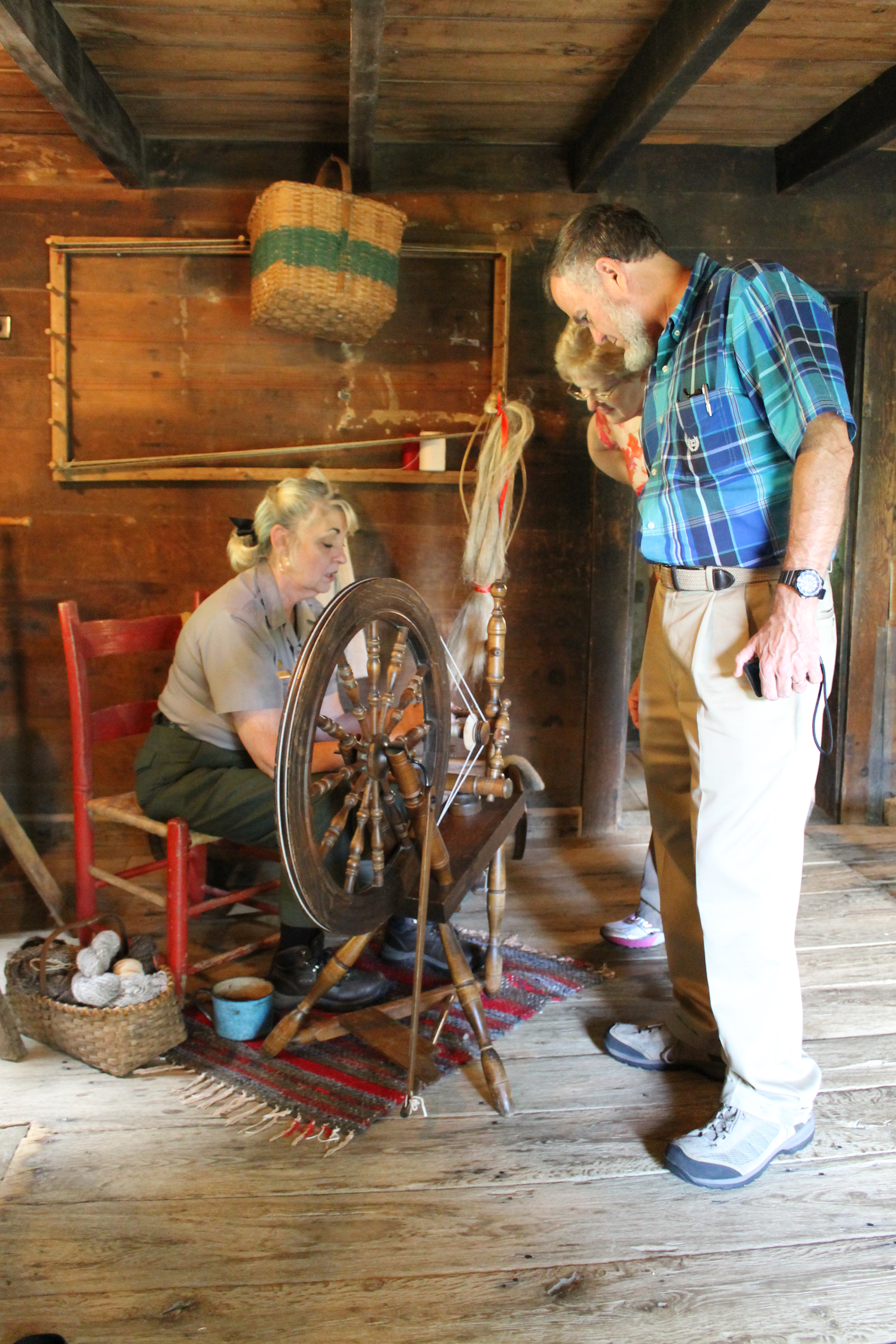
As the local food movement gains momentum and dreams of self-sufficiency percolates in the back of many minds, Jackie Sloop casts a realistic view of what it meant to be self-sufficient 125 years ago while raising a family along what is now the Blue Ridge Parkway. As she worked the treadle with her foot and fingered flax fiber through a spinning wheel, she explained to visitors that subsistence farming was much like any other small business venture. It required considerable planning, lots of hard work by all members of the family, and offered very little leisure time. She said that Caroline Brinegar, wife of Martin, likely considered spinning yarn as near a leisurely activity as came along.
Jackie’s path to Brinegar Cabin is as winding as the Parkway itself. From Caldwell County, she went off to college and received a degree in interior design. As children came along she was a stay-at-home mom. While devoting herself to her family, her outside interests circled around three seemingly different topical areas: natural science, arts, and history. For 25 years she devoted those interests as a board member and seamstress at Fort Defiance, the home of General William Lenoir who fought with the Overmountain Men at the Battle of Kings Mountain.
Home spun yarns
Then life made a series of twists and turns for Jackie. In 1988, she desired to broaden the view her children had of life and the country so they struck out on a 10½ week RV trip. They focused their stops on national parks. Some time later she moved to the Winston Salem area and put her degree to work with Village Interiors in Clemmons. Another curve led her to Rose Furniture where she worked in design sales.
Then as many do at midlife, Jackie took stock of her life and considered what she wanted to do in the upcoming years. The thought of opening a bed and breakfast in the mountains appealed to her. But, under the surface the love of natural science, art and history continued to bubble. A job with the National Park Service (NPS) seemed the perfect path to spin all of her interests into one strand. Jackie volunteered with the NPS for while and then in her mid-50s she was hired as a seasonal ranger assigned to the Doughton Park. Her focal area was the Brinegar Cabin.
Jackie explains the mechanics of spinning to Brinegar Cabin visitors
While Jackie came to the cabin knowing how to weave and make baskets, she had to learn to spin yarn. As she works the spinning wheel in the cabin, children often ask Jackie if she lives in the cabin. Jackie leans in as to share secret – “No, I play here,” she says with a smile.
Jackie considers herself a cultural ambassador for southern Appalachia. While many have a romanticized view of all mountain folks living in small log cabins, Jackie points out that in the early 1900s there were actually three distinct cultures along the ridgeline that became the Blue Ridge Parkway. Roaring Gap had grown into a community of summer getaways for affluent textile executives escaping the heat of the Piedmont. The clapboard home of the Woodruffs near Laurel Springs is representative of the larger working farms found across Alleghany County. And finally, the Brinegars’ home place exemplifies the small subsistence farms scattered throughout the mountains.
A key point that Jackie makes is that there is no single attribute or family dynamic that describes Alleghany County. Families like the Woodruffs and Doughtons in Laurel Springs, the Brinegers along the edge of the escarpment, and the Hanes, Reynolds and Chathams of Roaring Gap all contributed to the tapestry that make the county Absolutely Alleghany.
On September 26, 2015 Ranger Jackie Sloop and others will host Brinegar Day at the cabin. There will be cultural demonstrations, storytelling, and recognition of the Brinegar family for allowing us to share in their family’s history.
Guanxi. This Chinese word describes a set of personal relationships that drives the social network in China. These relationships often span generations, but can also be formed between relatively new friends. It was within this relational network that Sparta resident Tim Stamper was referred to as “Laoshi.” The English translation is “My Teacher.”
Tim and Sandy Stamper are well known in Alleghany County. Graduate school brought them to North Carolina and they moved to Alleghany County in 1990 to start a business, Pilgrims Rest Family Care Home. With a strong background in the construction trade, Tim later became a teacher at Alleghany High School (AHS) in Construction Technology. While at AHS he also served as an assistant wrestling coach with head coach, Paul Crouse. He later spent time in Texas working on pipelines and enjoyed the interactions with the rough and tumble crews. His has been a varied occupational journey.
A few years back, Tim and Sandy considered how to best use their variety of gifts and skills. They explored different options and the one that caught their eye was through the English Language Institute (ELIC). ELIC assigns teachers to universities around the world where they teach oral English to undergraduate students, and language and culture to graduate students. After being accepted to serve with ECLI, Tim and Sandy left the comforts of family and friends in Sparta and soon found themselves at Jiangxi Normal University in Nanchang, China.
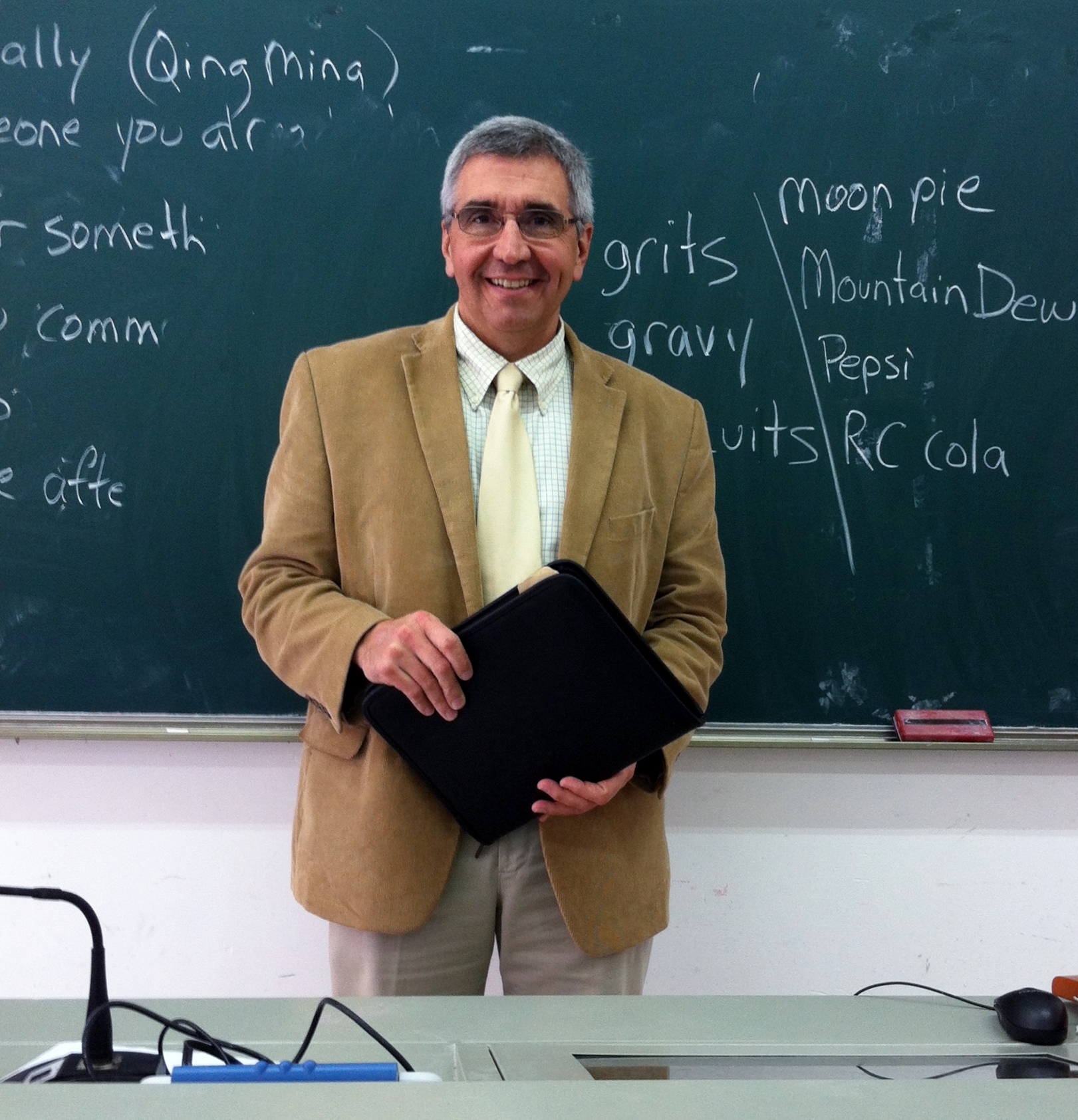
Tim with Jiangxi Normal University students
As one would expect, there were challenges moving to a different country. After living in a county of roughly 11,000 residents, Tim and Sandy found themselves in a city of over 5 million people. The air quality was poor due to industry, the volume of automobiles, and the high usage of coal. Their apartment had little insulation. During the summers it could be hot and in the winter it could be cold. The Internet service was notoriously slow. But, they found the people to be engaging, friendly and eager to share their culture with Tim and Sandy.
A dinner guest explains the Chinese stock market
While Tim was assigned to the university, his teaching extended beyond the classroom. Dinner parties became cultural exchange events where he taught western culture while learning the culture of the east. He learned that the Chinese citizens admire Americans and the United States. Older citizens recalled the American role of their freedom from Japanese oppression during World War II. The younger Chinese often teased Tim that the Chinese have become true capitalists while the Americans are becoming socialists. One of Tim’s most memorable encounters and lasting relationships began with a hospital visit.
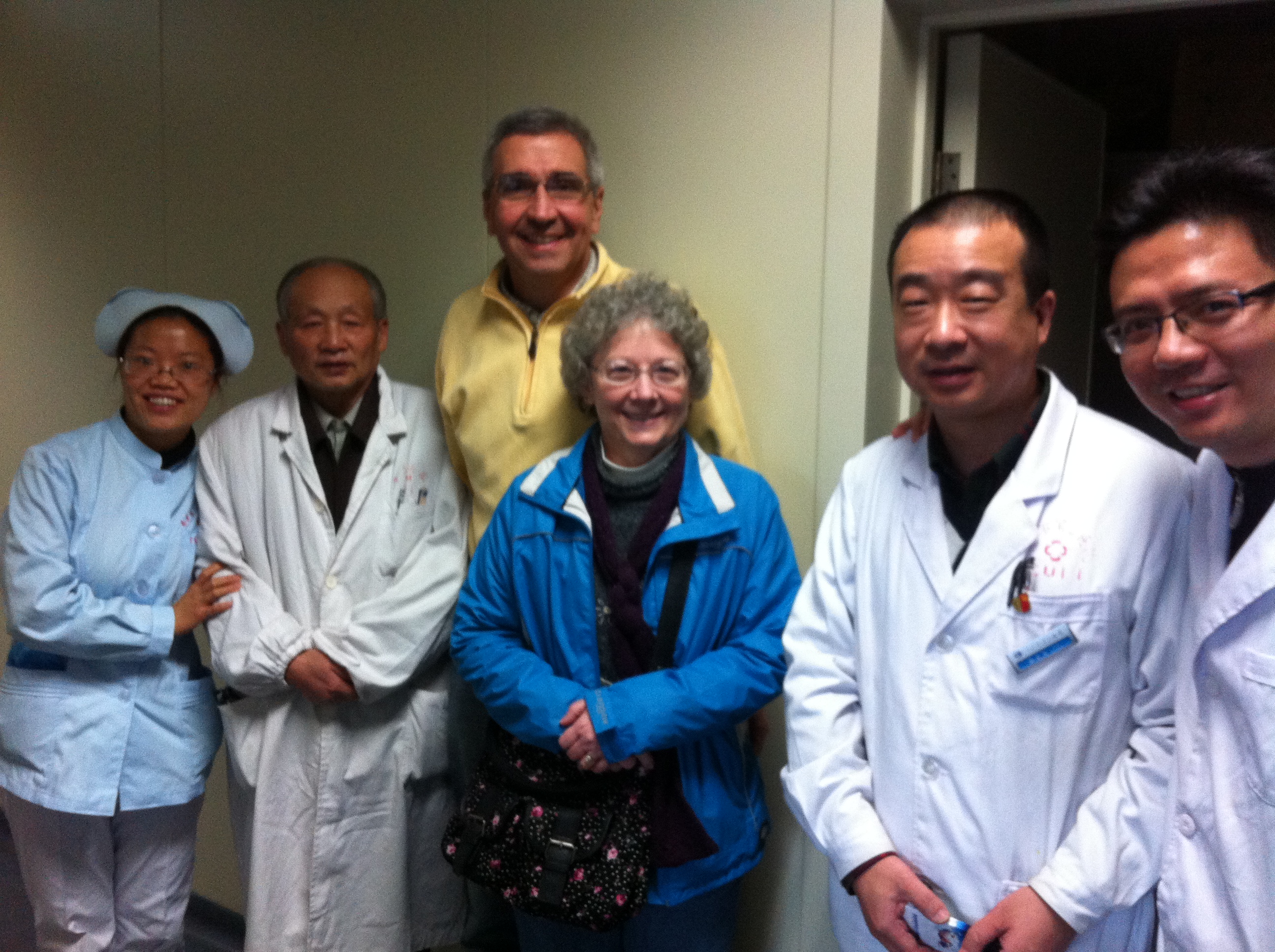
Throughout their time in China, Tim was plagued with gastrointestinal problems. Those problems finally got to the point where he needed medical attention. Tim made the trip to the hospital with his interpreter. There they saw a 78 year-old doctor. Aware that the Chinese paid before the delivery of any service, Tim asked the interpreter to ask the cost of the examination. The doctor, who turned out to be the chief of staff raised his hand and said in English, “You owe nothing.” Subsequent conversation revealed that the doctor had lived through the Japanese occupation and was a young professor during the Cultural Revolution. His desire was to improve his English while getting to know someone from the United States.
Tim and Sandy with the hospital staff
That encounter led to a deep friendship. As their relationship grew, the doctor shared with Tim his desire to see growth and development of the hospital staff’s English skills. He asked Tim and Sandy to come to the hospital twice a month. There they met with the staff, assisting them with English and leading discussions on western culture. Those conversations covered everything from Santa Claus to the Good Samaritan. It was this 78 year-old doctor who gave Tim honorable title of “Laoshi” – My Teacher.
Tim Stamper
The Chinese concept of “guanxi” is akin to an emotional bank account whose primary purpose is to assist or help others. Deposits are made and both parties understand that a withdrawal or favor may be requested in the future. This definition doesn’t describe the actions of Tim and Sandy Stamper. Whether they are in Sparta or Texas or China, they have spent a lifetime giving freely with little expected in return. It is a life philosophy that is countercultural in both the United States and China. But, it is a great model for those of us here in Alleghany.
If you or your group would like to hear more about the work ELIC does in China and throughout the world, you may contact Tim and Sandy at timsandy.stamper@gmail.com or by phone at 336-572-0900.
Some would say that traditional, old-time mountain music is more caught than taught. The songs are circular in nature, rotating from “A” to “B” parts and back again. In jams, the more accomplished musicians sit in the center of a circle and those learning surround them. Creating something of a vortex, the tunes pull those learning into the song.
Alleghany Junior Appalachian Musicians (JAM) follows a similar process. In 2000, Sparta (NC) Elementary School guidance counselor, Helen White, founded the first JAM program at Sparta Elementary. Aided by local musicians, the program set out to expose elementary aged students to traditional mountain music. As JAM grew in popularity, it received funding from a variety of sources and has spun into 29 programs in four states. But for all its success and expansion, at the center of the JAM circle are the students.
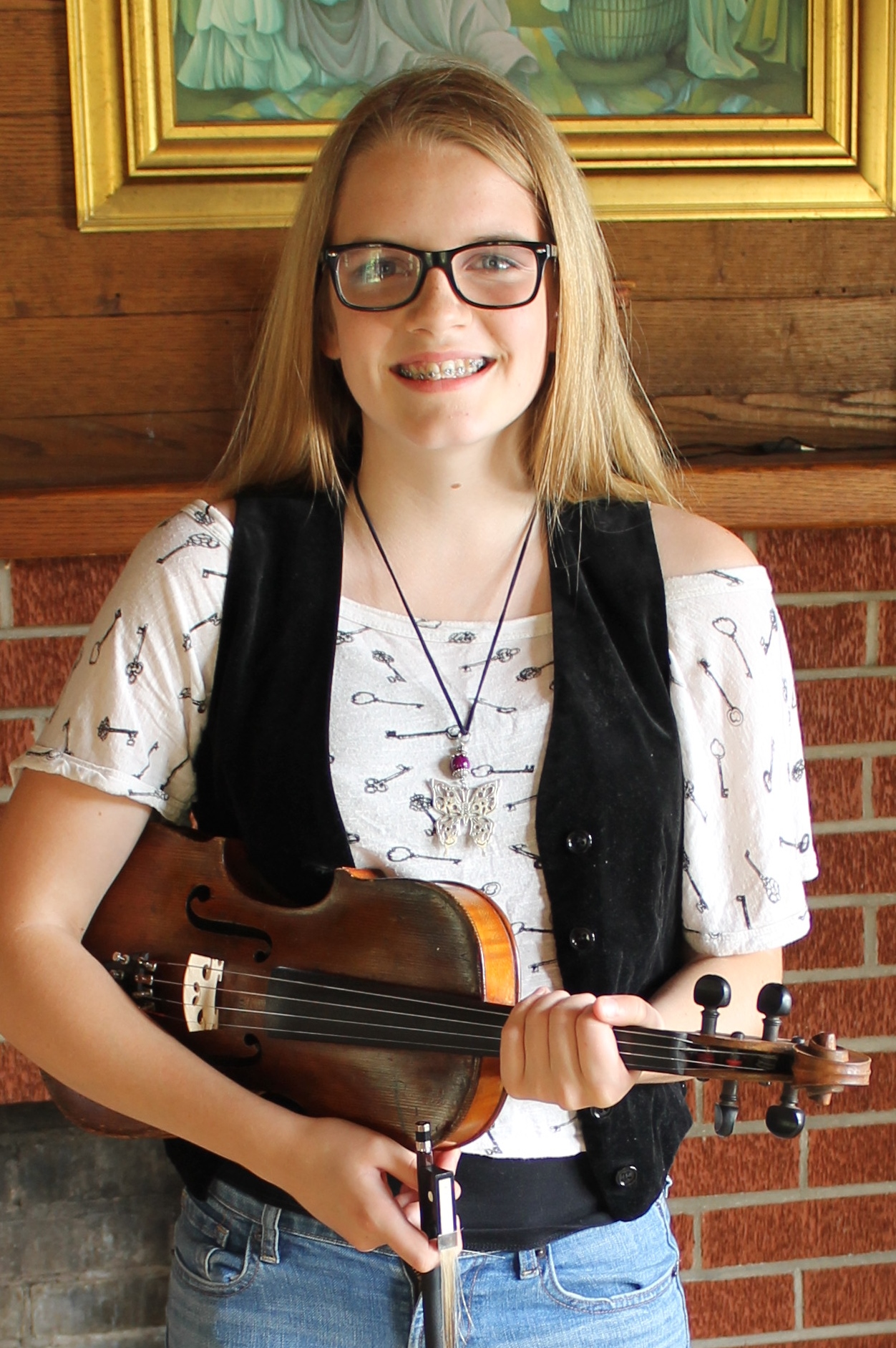
Tiffany Vargas
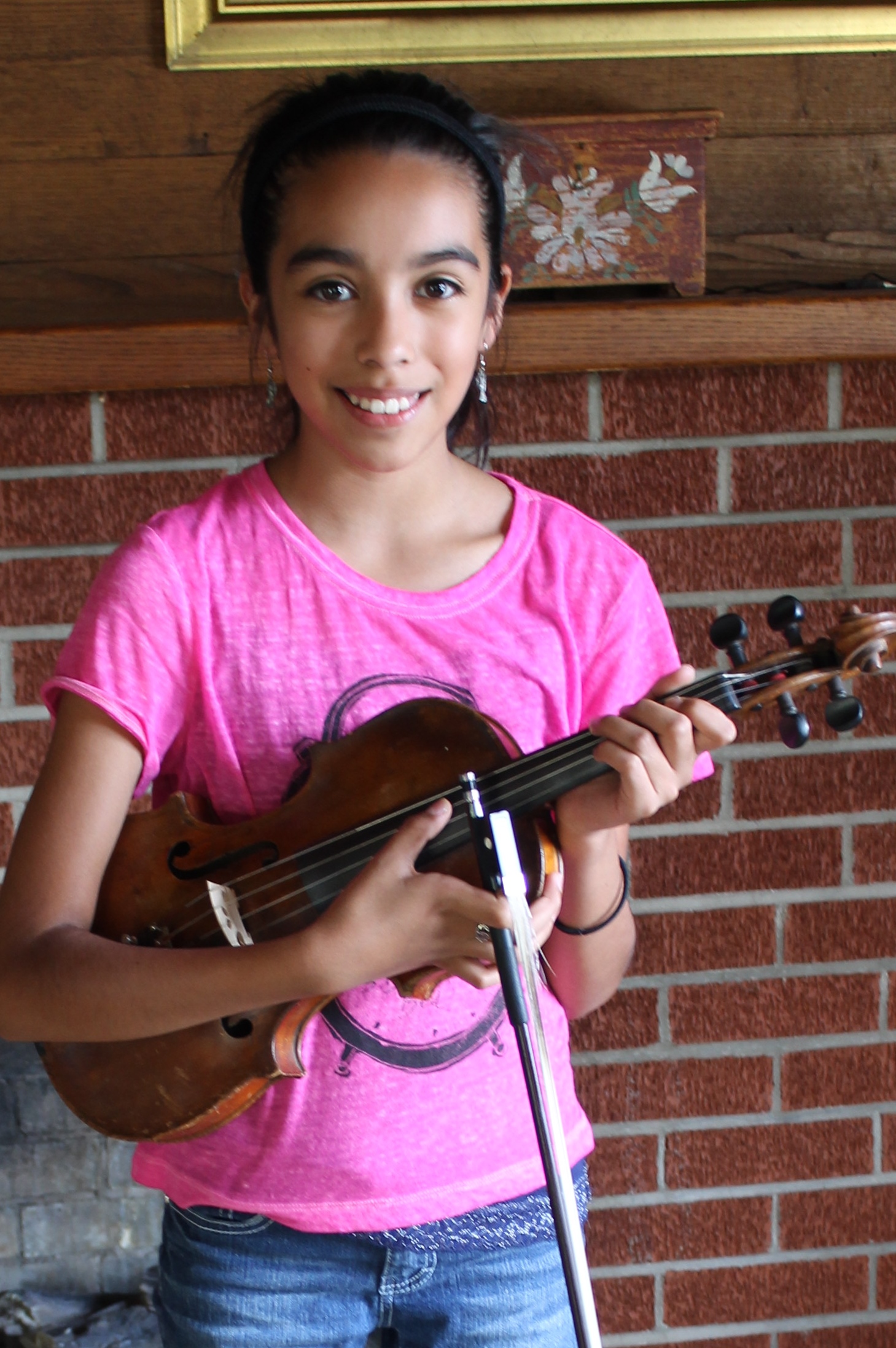
Tiffany Vargas has been a fiddle student in Alleghany JAM for five years. While she enjoys old-time tunes, she also plays semi-classical music in a string quartet and the flute in the school band. Her grandfather, Charlie Earp, is an accomplished classical and jazz musician, and Tiffany has taken fiddle lessons from Erika Godfrey in neighboring Surry County.
Isabel Engel
Isabel Engel has also been in the program for five years. Like Tiffany, she’s from a musical family. Isabel’s dad plays the guitar and her step-dad plays the guitar, mandolin and bass. Isabel finds music relaxing. She enjoys the challenge of working through the complexities of the songs. One of her favorite tunes is the Peacock Rag.
Musician and educator, Lucas Pasley, is the current program director Alleghany JAM. He describes the Alleghany County program as focusing on kids, heritage and community. With the help of local musicians, they seek to provide a positive place for kids to belong, regardless of their skill level.
In an exciting bit of news, this year, for the first time, Alleghany JAM will be offered to high school students. In addition to their instruction, the high school students will assist with the elementary classes. This will help the high school students develop leadership skills and enhance a pathway for them to college.
Across the country, public schools have suffered a loss of programs during the economic crisis. North Carolina and Alleghany County are no exception. As school funding decreases, the arts are often the first programs cut. This makes community based initiatives such as JAM even more valuable and vital. The students’ tuition only covers about 20% of the costs of the program. Alleghany JAM is funded primarily through grants and fundraising activities such as their annual golf tournament. Grassroots, local support keeps these students in class.
A popular song throughout the mountains asks Will the Circle Be Unbroken? With a focus on heritage and community, the Alleghany Junior Appalachian Musicians will assure that the circle remains intact as they continue to embrace and celebrate our mountain culture.
Alleghany JAM musicians will begin their recruitment tour on August 21, 2015. They will visit all four Alleghany public elementary schools and the Blue Ridge Christian School. The registration deadline is August 24, 2015.
For more information on how you can register a student or support JAM, contact Lucas Pasley at alleghanyjaminfo@gmail.com or 336-572-5266. For a great overview of the program, watch the UNC TV video below.
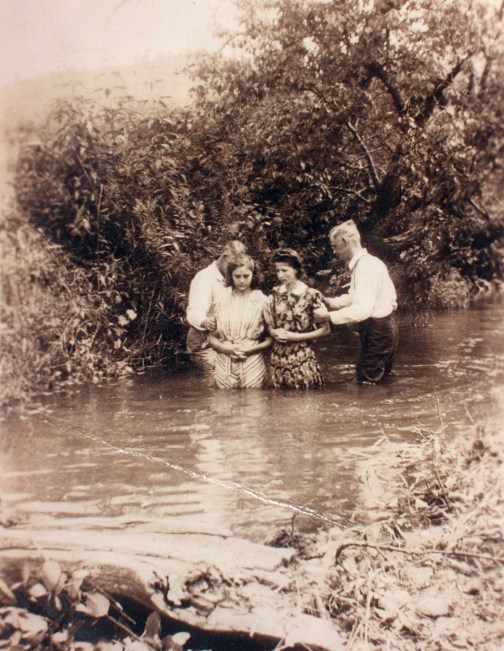
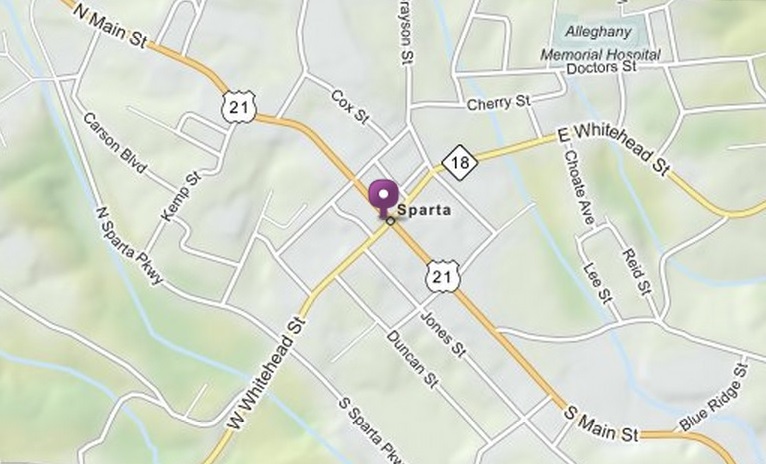
The Alleghany Historical-Genealogical Society will host an exhibit of vintage photographs of scenes from Alleghany County from September through December, 2015. The exhibit will be displayed in the Alleghany Historical Museum located across from the courthouse at 7 North Main Street in Sparta.
courtesy of Imagining Specialists
This exhibit coincides with the Looking at Appalachia exhibition being held at the Blue Ridge Business Development Center from September 19 through October 31, 2015.
courtesy of Imagining Specialists
As we look at these images from the past and examine those from the present, we hope to generate conversation of what Alleghany County will look like in the future.